Quick answer
California's current fire code is the 2025 California Fire Code (Title 24, Part 9), effective January 1, 2026. It works together with State Fire Marshal regulations in Title 19 and NFPA standards that set inspection intervals: NFPA 10 for extinguishers, NFPA 25 for sprinklers, NFPA 72 for alarms, NFPA 80 for fire doors and NFPA 17A/96 for kitchen hoods.
Annual inspection calendar
| System | Frequency | Standard | Performed by |
|---|---|---|---|
| Fire extinguishers – visual | Monthly | NFPA 10 | Owner |
| Fire extinguishers – maintenance & tag | Annually | NFPA 10 / Title 19 | CSFM-licensed concern |
| Dry chemical extinguisher internal exam | Every 6 years | NFPA 10 | CSFM-licensed concern |
| Extinguisher hydrostatic test | 5 or 12 years | NFPA 10 | CSFM-licensed concern |
| Kitchen hood suppression | Every 6 months | NFPA 17A / NFPA 96 | CSFM-licensed concern |
| Sprinkler valves & gauges | Monthly / Quarterly | NFPA 25 / Title 19 | Owner / contractor |
| Sprinkler system inspection & test | Annually | NFPA 25 / Title 19 | CSFM-licensed contractor |
| Sprinkler 5-year certification | Every 5 years | Title 19 Chapter 5 | CSFM-licensed contractor |
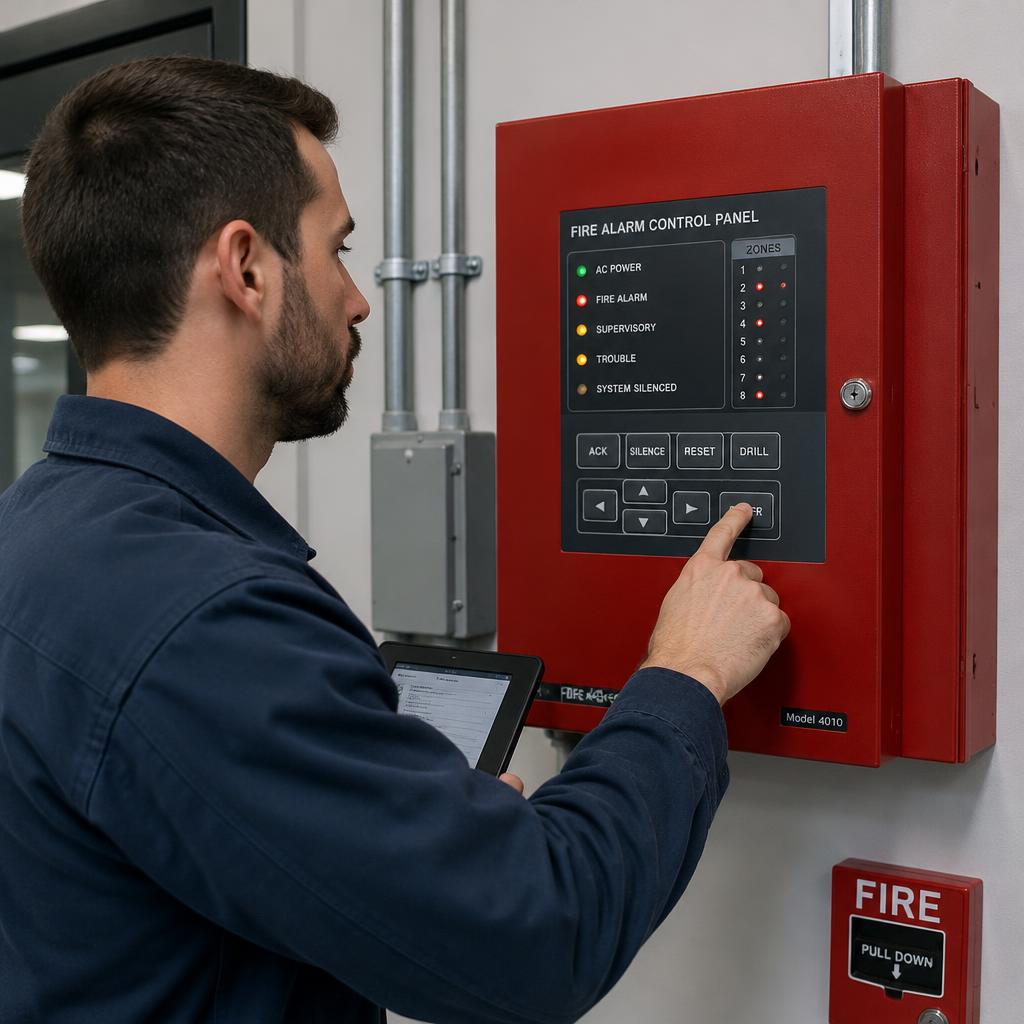
| Fire alarm system test | Annually | NFPA 72 / CFC 907.8 | Qualified technician |
| Fire doors & opening protectives | Annually | NFPA 80 / CFC 705 | Knowledgeable inspector |
| Emergency lights & exit signs | Monthly 30-sec / Annual 90-min | CFC 1205 / NFPA 101 | Owner / technician |
| Smoke alarms | Test monthly, replace at 10 years | H&S Code 13113.7 | Owner / landlord |
| Defensible space | Annually before fire season | PRC 4291 | Property owner |
Codes and standards explained
Statewide fire code
2025 California Fire Code (Title 24, Part 9)
Based on the 2024 International Fire Code with California amendments. Took effect January 1, 2026; cities and fire districts can adopt stricter local amendments.
State Fire Marshal regulations
California Code of Regulations Title 19
Sets licensing for extinguisher and suppression service companies, the CSFM service tag, and adopts NFPA 25 with California amendments including the 5-year sprinkler certification.
Portable fire extinguishers
NFPA 10
Monthly inspection, annual maintenance, 6-year maintenance and hydrostatic testing intervals.
Water-based fire protection systems
NFPA 25
Inspection, testing and maintenance of sprinklers, standpipes, fire pumps and water tanks.
Fire alarm and signaling
NFPA 72
Testing frequencies for panels, detectors, notification appliances and household smoke alarms.
Fire doors and opening protectives
NFPA 80
Annual inspection and testing of fire-rated door assemblies with written records.
Kitchen suppression and ventilation
NFPA 17A and NFPA 96
Semi-annual service of wet chemical systems and hood cleaning by cooking volume.
Defensible space
Public Resources Code 4291 & Government Code 51182
100 feet of defensible space in SRA and very high fire hazard zones, with Zone 0 added by AB 3074.
Wildland-urban interface construction
California Building Code Chapter 7A
Ignition-resistant materials, ember-resistant vents and roofing in fire hazard severity zones.
Smoke and carbon monoxide alarms
Health & Safety Code 13113.7 / 13260
10-year sealed battery smoke alarms and CO alarms in dwellings with fuel-burning appliances or attached garages.
Cal Fire and San Diego County
CAL FIRE's San Diego Unit and the San Diego County Fire Protection District protect unincorporated areas and State Responsibility Areas. Inside city limits, departments such as San Diego Fire-Rescue, Chula Vista, Oceanside and Escondido enforce the California Fire Code with local amendments. Defensible space inspections typically run during fire season, and homes sold in high or very high fire hazard severity zones need documentation of a defensible space inspection under AB 38.
Who can perform inspections?
Extinguisher, kitchen suppression and sprinkler service in California must be performed by a company licensed by the State Fire Marshal (a "licensed concern"), which attaches an official service tag. Fire alarm testing is performed by qualified technicians, and fire door inspections by individuals knowledgeable about door assemblies.
This guide is general information, not legal advice. Your local fire authority (AHJ) has final say and may adopt stricter rules.